Introduction
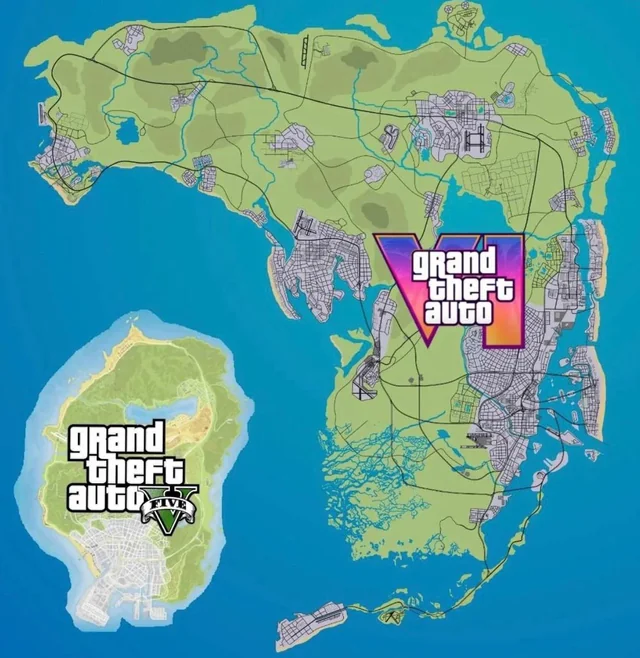
Have you ever watched a video comparing the sizes of popular game maps and wondered, “Is this comparison even realistic?” It’s a common question among gamers. Videos and images often place maps from different games side by side, making some worlds appear incredibly huge while others look surprisingly small.
However, these comparisons don’t always tell the complete story. The way game worlds are designed, measured, and experienced can vary significantly. In this article, we’ll explore whether map size comparisons are truly realistic and what factors matter beyond simple square kilometers.
Why Map Size Comparisons Can Be Misleading
A large map doesn’t automatically mean a better or longer gaming experience. Many comparison charts only focus on total land area while ignoring other important aspects such as:
- Vertical exploration
- Building interiors
- Underground areas
- Travel speed
- Gameplay density
- Mission locations
For example, two games may have maps of similar size, but one could feel much larger because players travel more slowly or because the environment is packed with interactive content.
Different Games Measure Maps Differently
Game developers use different methods to build their worlds. Some create seamless open worlds, while others divide the environment into separate regions connected by loading screens.
Because of these differences, direct size comparisons are not always accurate. A map measuring 100 square kilometers in one game may feel smaller than a 50-square-kilometer map in another due to design choices.
Gameplay Density Matters More Than Size
Many modern games prioritize meaningful exploration instead of creating empty landscapes.
A smaller world filled with:
- Side quests
- Hidden collectibles
- Random encounters
- Detailed cities
- Interactive NPCs
can provide far more entertainment than a massive map with very little to discover.
Players often remember memorable locations rather than the overall size of the world.
Travel Mechanics Affect Perceived Size
Fast travel systems, vehicles, flying, and movement speed all influence how large a game world feels.
For example:
- Walking across a map can make it feel enormous.
- Driving at high speed makes the same distance seem much shorter.
- Instant fast travel reduces the sense of scale even further.
This is why two maps with identical dimensions can feel completely different during gameplay.
Real-World Scaling Isn’t Always the Goal
Game worlds are designed primarily for entertainment, not geographical accuracy.
Developers often compress cities, mountains, forests, and roads to improve pacing and keep players engaged. As a result, comparing game maps directly to real-world locations isn’t always realistic.
Why You Shouldn’t Judge a Game Only by Map Size
Some of the most beloved games feature relatively modest map sizes but deliver exceptional experiences through storytelling, world-building, and engaging gameplay.
Instead of focusing only on square kilometers, consider factors such as:
- Exploration opportunities
- Variety of environments
- Mission quality
- World detail
- Player freedom
- Replay value
These elements usually have a much greater impact on overall enjoyment.
Conclusion
So, is a map size comparison realistic? The answer is not always. While map comparisons can be entertaining and provide a rough idea of scale, they rarely capture the full gaming experience.
A game’s world should be judged not only by its physical size but also by how engaging, detailed, and immersive it feels. In many cases, a smaller but carefully designed map offers a richer adventure than a much larger empty world.
Ultimately, the quality of exploration matters far more than the numbers displayed in comparison charts.